

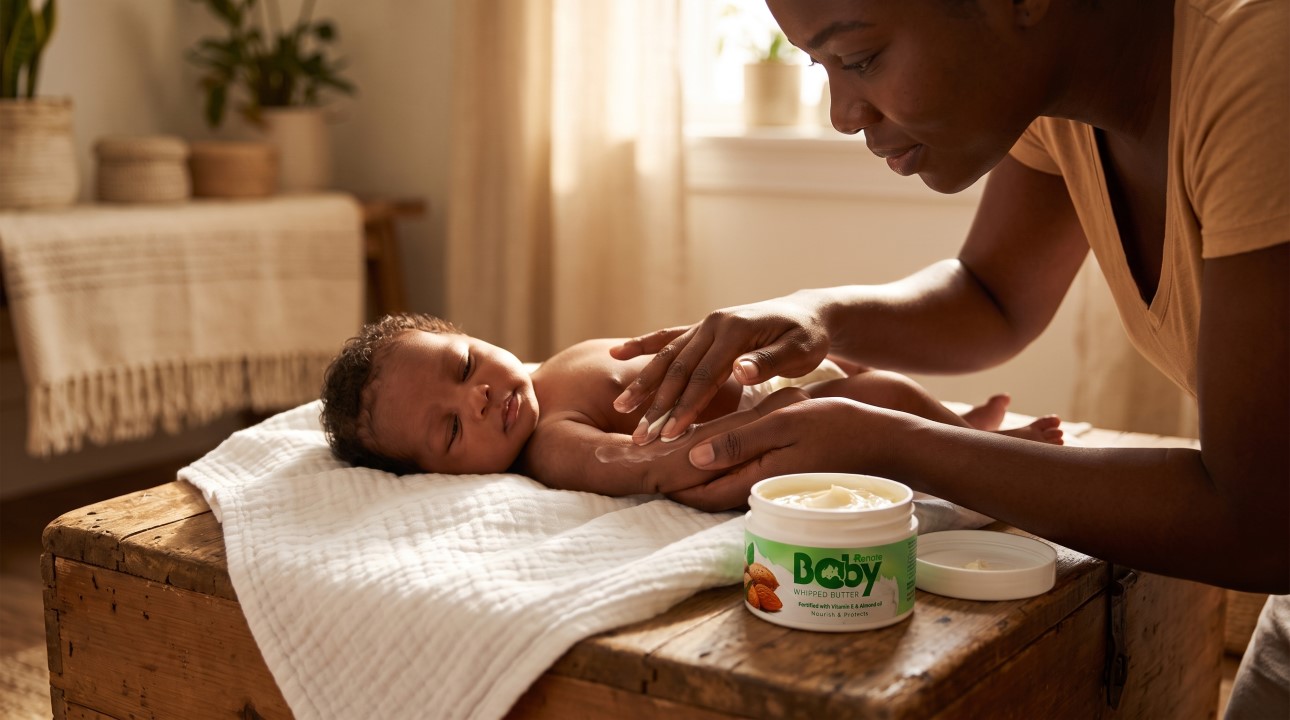
Why Babies in Ghana Are Prone to Dry Skin
Dry baby skin remedies are one of the most searched topics among new mothers in Ghana — and for very good reason. Babies are born with a fragile skin barrier that is still developing. Unlike adult skin, a newborn’s outermost layer, the stratum corneum, is thinner, less oily, and far more porous. This means moisture escapes quickly — a process called transepidermal water loss (TEWL).
In Ghana, two environmental extremes make this worse. During the harmattan season (November to March), the dry, dusty winds sweeping down from the Sahara strip moisture from every surface — including your baby’s delicate skin. Even outside of harmattan, air-conditioned rooms, overhead fans, and hard tap water can all pull hydration from a baby’s skin faster than it can replenish.
Melanin-rich skin, while naturally more resilient to UV damage, is actually more visible when dry — that telltale grey-white ashy look is a sign the skin barrier is compromised. For Ghanaian and West African babies, keeping that skin barrier intact isn’t just about comfort; it actively reduces the risk of eczema, infections, and irritation in the long run.
According to the World Health Organization’s newborn health guidelines, proper skin care in the first weeks of life is critical to protecting infant health — especially in tropical and semi-arid climates.
7 Proven Dry Baby Skin Remedies Using Natural Ingredients
Before reaching for commercial lotions loaded with synthetic fragrance and preservatives, consider that many of the most effective dry baby skin remedies come straight from nature — and many are already familiar in Ghanaian households.
1. Shea Butter — Ghana’s Gold Standard
Unrefined shea butter is arguably the best single-ingredient moisturiser for dry baby skin. Rich in oleic and stearic fatty acids, it deeply nourishes the skin barrier while its natural vitamin E and cinnamic acid content provides gentle anti-inflammatory protection. A small amount warmed between your palms and massaged into damp skin after a bath is one of the simplest and most effective dry baby skin remedies available.
2. Coconut Oil
Virgin coconut oil is packed with lauric acid, a medium-chain fatty acid with natural antimicrobial properties. It absorbs quickly and creates a light occlusive layer that locks moisture in. It works especially well on baby scalp dryness and cradle cap. Use a cold-pressed, unrefined version for maximum benefit.
3. Lukewarm Baths — Not Hot
Hot water destroys the skin’s natural lipid barrier. Keep baths short (5–10 minutes) and use only lukewarm water. This alone can make a dramatic difference. The American Academy of Pediatrics recommends sponge baths for newborns until the umbilical cord falls off, limiting full immersion that can further dry out new skin.
4. Sweet Almond Oil
Sweet almond oil is lightweight, hypoallergenic, and rich in vitamin A, vitamin E, and omega-9 fatty acids. It penetrates the skin quickly without leaving a greasy residue — making it ideal for use in warm, humid Ghanaian weather. It’s a particularly gentle dry baby skin remedy for newborns with extra-sensitive skin.
5. Oatmeal Soaks
Colloidal oatmeal — finely ground oats dissolved in bathwater — is clinically proven to soothe dry, irritated skin. It forms a protective film on the skin surface, reduces itching, and supports the skin’s natural pH. Add 2–3 tablespoons of finely blended plain oats to your baby’s bathwater during harmattan flare-ups.
6. Applying Moisturiser to Damp Skin
Timing matters enormously. Apply your chosen moisturiser within 3 minutes of bathing, while the skin is still slightly damp. This technique — known as “soak and seal” — traps water in the skin and dramatically improves how well any dry baby skin remedy works.
7. Humidifier in the Baby’s Room
During harmattan season, indoor air becomes extremely dry. A cool-mist humidifier in your baby’s sleeping area can raise ambient humidity and passively reduce skin moisture loss overnight — an easy, non-topical addition to your dry skin routine.
Ingredients to Avoid on Dry Baby Skin
Not all baby products are created equal. Many popular budget lotions and powders contain ingredients that actually worsen dry baby skin over time. Here’s what to watch out for:
- Talcum powder — commonly used in Ghanaian households, but it absorbs skin moisture and poses a respiratory risk. Avoid completely.
- Synthetic fragrance — listed as “parfum” or “fragrance” on labels. It’s a cocktail of undisclosed chemicals and one of the most common causes of contact dermatitis in babies.
- Alcohol (denatured) — deeply drying and damaging to an immature skin barrier.
- Parabens and sulphates — common preservatives and foaming agents that disrupt the skin’s natural microbiome.
- Bleaching or lightening agents — entirely inappropriate for babies at any age.
The safest approach is to choose products with short, recognisable ingredient lists — preferably plant-based and free from synthetic additives.
How to Moisturise Your Baby Properly — Step-by-Step
Even the best dry baby skin remedies won’t work if they’re applied incorrectly. Here is a simple routine any Ghanaian mother can follow:
- Bathe your baby in lukewarm water for no more than 10 minutes using a mild, fragrance-free wash.
- Pat — don’t rub — the skin dry with a soft cotton towel, leaving it slightly damp.
- Apply your moisturiser immediately — within 3 minutes — using gentle circular strokes. Focus on dry-prone areas: cheeks, elbows, knees, and ankles.
- Use a thicker balm or shea butter on any visibly cracked or peeling patches.
- Dress your baby in breathable, 100% cotton clothing to avoid trapping heat and sweat against the skin.
Repeat this routine daily, or twice daily during harmattan season when environmental dryness peaks.
When to See a Doctor About Your Baby’s Dry Skin
Most cases of dry baby skin respond well to consistent natural moisturising. However, some signs indicate a deeper issue that needs medical attention:
- Skin that is cracked, bleeding, or oozing
- Persistent redness or rash that spreads
- Baby is scratching constantly and losing sleep
- No improvement after 2 weeks of consistent moisturising
- Yellowish crusting (possible infection)
These could be signs of eczema (atopic dermatitis), a fungal infection, or another condition requiring prescription treatment. Always consult a qualified paediatrician or dermatologist if you are unsure.
Frequently Asked Questions About Dry Baby Skin Remedies
What is the best natural remedy for dry skin on a baby?
Unrefined shea butter is widely regarded as the best natural dry baby skin remedy. It is rich in fatty acids and vitamins that deeply nourish the skin barrier, and it is safe enough for daily use on newborns. Apply a small amount to damp skin after every bath for best results.
Is coconut oil safe for babies with dry skin?
Yes. Virgin, cold-pressed coconut oil is generally safe for babies and is an effective dry baby skin remedy. Its lauric acid content provides both moisturisation and mild antimicrobial protection. However, do a small patch test first, especially if your baby has a history of sensitive or reactive skin.
Why does my baby’s skin get so dry during harmattan?
Harmattan winds carry extremely low humidity from the Sahara Desert across West Africa. This dry air dramatically increases transepidermal water loss in babies, whose skin barrier is not yet fully developed. Moisturising twice daily and using a humidifier in the baby’s room are the most effective responses.
How often should I moisturise my baby’s dry skin?
During dry periods like harmattan, moisturise your baby at least twice daily — always once after bathing. Outside of dry season, once daily after the bath is usually sufficient. Consistency matters far more than quantity; a little moisturiser applied every day outperforms heavy application done occasionally.
Can I use adult shea butter products on my baby?
Pure, unrefined shea butter is safe for babies. However, many adult shea butter products contain added fragrances, preservatives, or active ingredients (like retinol or AHAs) that are not suitable for infant skin. Always choose products specifically formulated for babies, or use plain unrefined shea butter on its own.
Is baby powder good for dry skin?
No. Talcum powder is not a dry baby skin remedy — it actually absorbs moisture from the skin and can worsen dryness. It also poses a serious inhalation risk for babies. Paediatricians across the world recommend avoiding baby powder entirely and opting for moisturising oils and creams instead.
When should I be worried about my baby’s dry skin?
See a doctor if your baby’s skin is cracking, bleeding, or showing signs of infection such as oozing or yellow crusting. Also seek medical advice if the dryness is accompanied by persistent redness, spreading rash, or if natural dry baby skin remedies have shown no improvement after two weeks of consistent use.