

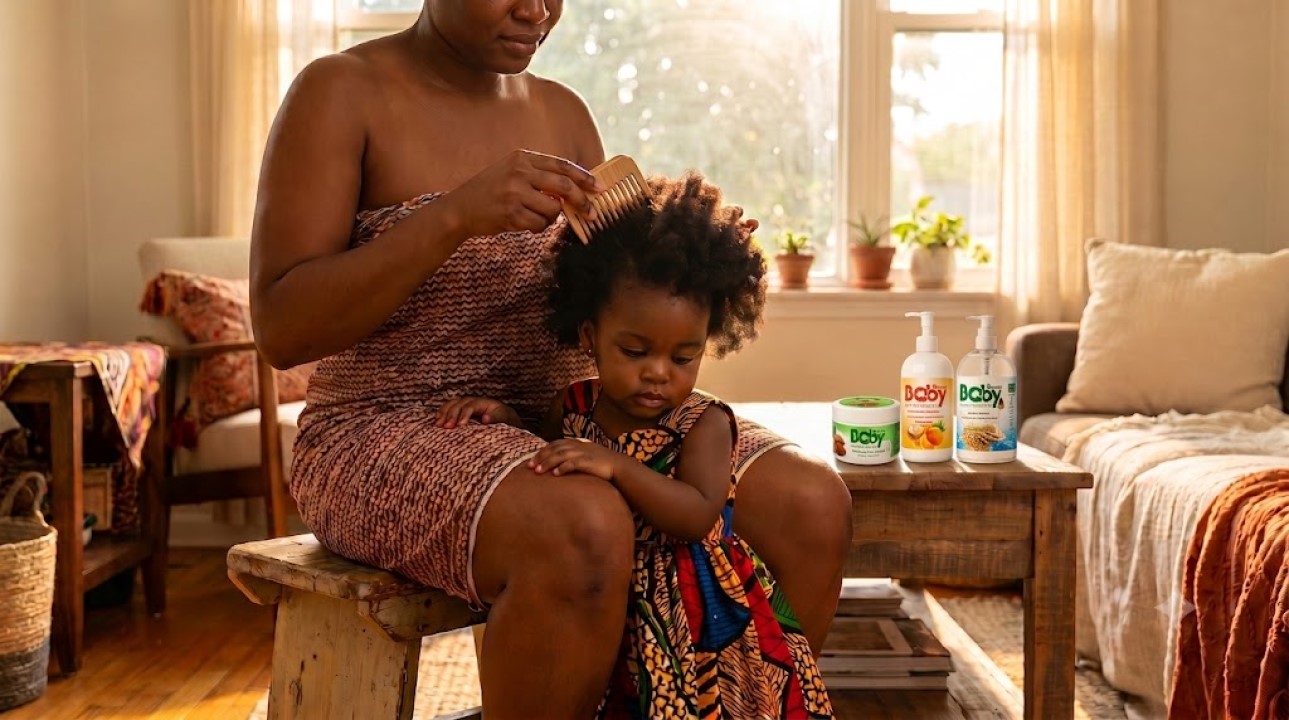
Why Baby Hair Tangles So Easily (Especially in Ghana’s Climate)
If you’ve ever tried to comb your baby’s hair and ended up with a screaming child and a fistful of knots, you’re not alone. Learning how to detangle baby hair naturally is one of the most searched questions among Ghanaian and West African mums — and for good reason.
Baby hair, especially the tight coils and curls common among melanin-rich West African babies, has a naturally dry texture. The curls make it difficult for sebum — the scalp’s natural oil — to travel down each strand the way it does on straighter hair types. Add Ghana’s notorious harmattan season, when the air turns dry and dusty, and even the softest baby hair can become a dense, tangled mass almost overnight.
During the wet season, things aren’t always easier. High humidity can cause hair to swell and lock together at the cuticle, creating frizz-driven tangles that feel impossible without the right approach. The good news? With the right products, tools, and technique, you can detangle baby hair naturally — calmly, gently, and without a single tear shed.
This guide is built around practical, expert-backed advice that works for Ghanaian and West African hair textures and climates. Let’s get into it.
How to Detangle Baby Hair Naturally: 8 Proven Tips
These tips work together as a system. The more of them you apply consistently, the easier detangling becomes over time.
1. Always Detangle on Damp — Not Dry — Hair
Dry hair is brittle hair. Trying to pull a comb through dry, coily baby hair causes unnecessary breakage and pain. Always mist hair lightly with water or a water-based leave-in spray before you begin. Damp hair has more elasticity and gives way to the comb much more gently.
2. Use a Natural Oil or Butter as a Slip Agent
This is the single most important step to detangle baby hair naturally. A “slip agent” is any ingredient that coats the hair shaft and reduces friction — allowing knots to glide apart instead of ripping. Shea butter is the gold standard for West African hair types. It’s thick enough to provide real slip, yet it doesn’t weigh fine baby hair down. Other excellent options include:
- Coconut oil — penetrates the hair shaft to reduce protein loss and breakage
- Sweet almond oil — lightweight and rich in Vitamin E, great for sensitive scalps
- Castor oil — thicker, best used mixed with a lighter oil for babies
Warm a small amount between your palms and work it through sections of damp hair before combing.
3. Section the Hair Before You Start
Never attack the whole head at once. Divide baby’s hair into four or more sections using gentle hair clips. Work through one section at a time. This makes the process manageable, reduces total detangling time, and prevents hair from re-tangling as you work.
4. Always Work From the Ends Up
Starting at the roots and dragging the comb downward is the fastest way to create more knots — and more pain. Instead, hold the hair mid-shaft to protect the roots and start detangling from the tips. Gradually work your way up towards the scalp in small increments. This is the single technique change that most transforms the detangling experience for babies.
5. Use Your Fingers First
Before any comb touches your baby’s hair, use your fingers to gently separate large knots. Finger detangling gives you the most control and causes the least trauma to delicate strands. Once the major knots are out, move to a wide-tooth comb.
6. Choose the Right Comb — and Move Slowly
A wide-tooth comb is non-negotiable for coily baby hair. Fine-tooth combs and brushes tear through curls and create unnecessary pain. Move slowly and deliberately — rushing is the enemy of painless detangling. If you meet resistance, stop, add more slip agent, and use your fingers to loosen that section before continuing.
7. Detangle Regularly, Not Just on Wash Day
The longer you leave baby’s hair without attention, the worse tangles become. A gentle, quick finger-detangle every two to three days — especially at bedtime — prevents the kind of dense matting that makes wash day miserable. Consistency is your best detangling tool.
8. Protective Styles Reduce Tangling Between Sessions
Simple, loose protective styles like two-strand twists or flat twists keep baby’s hair organised and dramatically reduce day-to-day tangling. Avoid tight styles that stress the delicate hairline. The goal is containment, not tension.
The Right Tools Make All the Difference
Even the best technique fails with the wrong tools. Here’s what every Ghanaian mum should keep in her baby hair kit:
- Wide-tooth comb — the wider the teeth, the gentler on coily textures
- Seamless comb — seams on cheap combs snag and tear hair; always choose seamless
- Soft-bristle detangling brush — optional, but can help smooth hair after combing
- Spray bottle — for misting hair with water before each session
- Satin or silk sleep cap or pillowcase — cotton pillowcases create friction overnight and are one of the biggest hidden causes of baby hair tangling
Switching to a satin pillowcase alone can cut your detangling time in half. It’s a simple change with a dramatic impact — particularly during harmattan when moisture loss overnight is at its highest.
Start with the Right Wash Routine
Detangling doesn’t begin at the comb. It begins in the bath. A gentle, moisturising shampoo that cleans without stripping is essential. Harsh sulphate-heavy shampoos remove the natural oils that protect baby’s hair cuticle — leaving it rough, open, and prone to tangling.
According to the American Academy of Pediatrics (AAP), baby cleansing products should be mild, pH-balanced, and free from harsh additives to protect the integrity of delicate skin and hair. Look for tear-free, sulphate-free formulas enriched with conditioning agents like shea butter or panthenol.
After washing, always apply a moisturising product to hair while it is still damp — this locks in hydration before the harmattan air or air conditioning pulls it out. This simple step of sealing moisture post-wash is often the difference between manageable hair and a tangled mess by the next morning.
The World Health Organization (WHO) also emphasises the importance of gentle, toxin-free care products for infants during their earliest developmental stages — a standard Renate Cosmetics is built around.
Renate Products That Make Detangling Easier
If you want to detangle baby hair naturally with the least friction possible, what you apply to the hair matters enormously. Two Renate products are particularly well-suited to a pain-free detangling routine.
Start in the bath with the Renate Baby Wash & Shampoo — a gentle 2-in-1 cleanser that washes both baby’s body and hair without stripping natural moisture. It’s tear-free, pH-balanced, and formulated to leave baby’s hair feeling soft and manageable after every wash — which means less work for you at the comb. For Ghanaian babies with naturally drier hair textures, starting wash day with a sulphate-free, moisture-preserving shampoo is the foundation everything else builds on.
After the bath, while hair is still damp, reach for the Renate Whipped Baby Butter. This rich, whipped formula is packed with shea butter — the ultimate natural slip agent for West African hair and skin. Worked through damp sections before combing, it coats each strand, reduces friction, and lets knots glide apart with minimal effort. It’s also deeply nourishing, which means it improves hair manageability over time with consistent use — not just in the moment. For babies with very dry or sensitive scalps, this is the product that turns a dreaded detangling session into a calm, bonding moment.
Together, these two products form a complete wash-and-detangle system rooted in natural, shea butter-based care — exactly what Ghanaian baby hair needs.
Frequently Asked Questions
How do I detangle baby hair naturally without causing pain?
Always start on damp hair, apply a natural slip agent like shea butter or coconut oil, and use your fingers to loosen large knots before introducing a wide-tooth comb. Work from the tips up towards the roots, and section hair into manageable parts. Slow, deliberate movements — not speed — are the key to a pain-free experience.
What is the best natural oil to detangle baby hair?
Shea butter is widely considered the best option for West African baby hair textures. It provides excellent slip, seals in moisture, and is gentle enough for the most sensitive scalps. Coconut oil and sweet almond oil are also effective, especially when blended with shea butter for a lighter feel.
How often should I detangle my baby’s hair?
For most babies with coily or curly hair textures, a gentle finger-detangle every two to three days prevents serious knot build-up. A full comb-through with a slip agent can be done on wash days, typically once or twice a week. Leaving hair too long between sessions is the most common cause of painful, dense tangles.
Is it safe to use shea butter on a newborn’s hair?
Yes. Pure, unrefined shea butter is one of the safest natural ingredients for newborn hair and skin. It is free from harsh chemicals, deeply moisturising, and has a long history of safe use across West Africa for infant care. Always choose products formulated specifically for babies to ensure appropriate concentration and purity.
Why does my baby’s hair tangle so fast during harmattan?
Harmattan’s dry, dusty air rapidly pulls moisture from hair strands, causing the cuticle to roughen and hair to knot together more easily. The solution is to increase moisturising frequency during this season — mist hair with water more often, apply a shea butter-based product daily, and use a satin pillowcase to reduce overnight friction and moisture loss.
Can I detangle baby hair when it is completely dry?
It’s best to avoid detangling completely dry baby hair, especially coily textures common in West African babies. Dry hair has less elasticity and is far more prone to breakage and pain when combed. Always add some moisture — either by misting with water or applying a water-based leave-in product — before detangling.
What type of comb is best for detangling baby hair?
A wide-tooth, seamless comb is the safest and most effective tool for detangling baby hair. Avoid fine-tooth combs, which snag and tear coily textures. For very young babies with minimal hair, your fingers alone are often the gentlest and most appropriate detangling tool.