
Quick answer: Imported baby hair products are often formulated for temperate climates and travel through longer supply chains, which raises both cost and counterfeit risk in the Ghanaian market. Locally made products are typically formulated around the country’s climate and sourced with shorter, more traceable supply chains — but imported brands sometimes offer longer track records and larger-scale product testing.
Why This Comparison Matters
Parents shopping for baby hair products in Ghana usually see both categories side by side — an imported brand with international packaging, and a locally manufactured option. The two aren’t equivalent just because they sit on the same shelf. Where a product is made affects its formulation, its verification trail, and in some cases, its authenticity.
Formulation: Built for Which Climate?
Most internationally distributed baby hair products are formulated primarily for temperate or four-season markets, where humidity swings are less extreme than Ghana’s harmattan-to-rainy-season cycle. A product engineered for a stable, moderate climate isn’t necessarily wrong for Ghana, but it isn’t purpose-built for it either. Locally made products have a direct incentive to formulate around harmattan dryness and rainy-season humidity, since that’s the environment the manufacturer is also operating in day to day.
Registration, Verification, and Counterfeit Risk
This is the area parents should weigh most carefully. Ghana’s FDA requires both locally manufactured and imported cosmetics to be registered before sale, but imported products travel through more hands — importers, distributors, retailers — before reaching a shelf, which creates more opportunities for counterfeit or unregistered goods to enter the supply chain. That risk isn’t theoretical: in a nationwide surveillance exercise across 15 regions, Ghana’s FDA seized over 4,500 fake and unregistered cosmetic products, some containing hazardous substances. Read the full report →
A locally manufactured product sold directly by the manufacturer has a shorter, more traceable chain between formulation and shelf — there are fewer intermediary points where a counterfeit version could be substituted in.
Ingredient Freshness and Sourcing
Imported products often need to survive weeks or months in transit and storage before reaching a Ghanaian shelf, which typically means formulating with more preservatives or stabilizers for shelf stability across that journey. Locally made products, sold closer to their point of manufacture, generally travel a shorter distance from production to purchase — and can source ingredients like shea butter directly from regional suppliers rather than through multiple import intermediaries.
Cost: Where the Price Difference Comes From
Imported cosmetics carry import duties, freight costs, and multiple distributor margins before reaching the retail price a parent actually pays. Locally manufactured products skip most of that chain, which is usually reflected in a lower shelf price for a comparable formulation — not because the local product is lower quality, but because it isn’t carrying the same cost stack.
Returns and Consumer Recourse
If a baby hair product causes irritation or simply doesn’t perform, what happens next differs meaningfully between imported and locally made products. A locally manufactured product typically has a direct return or guarantee process through the manufacturer or their retail partners within Ghana — a straightforward path for a refund or exchange. An imported product bought through a reseller or informal import channel often has no clear return path at all, since the manufacturer may have no retail presence or support structure in Ghana. That gap matters more for baby products than most other purchases, given how directly it affects whether a parent can act quickly if a reaction occurs.
Where Imported Brands Still Have an Edge
To be fair to the other side: established international brands often have decades of product history, larger-scale clinical or consumer testing, and stronger name recognition, which some parents weigh heavily when trying an unfamiliar category for the first time. That’s a legitimate reason some parents default to a known imported brand, even at a higher price.
How to Spot a Counterfeit Cosmetic Product in Ghana
A few practical checks catch most counterfeit or unregistered baby hair products before purchase, whether imported or locally made:
- Check the FDA registration number. Genuine registered products carry a visible FDA Ghana registration number on the packaging. If it’s missing, worn off, or looks tampered with, that’s a red flag.
- Inspect the print quality. Counterfeit packaging often has slightly blurred logos, inconsistent fonts, or colors that don’t quite match the genuine product.
- Compare the batch number and expiry date format. Genuine manufacturers use consistent formatting across their product line; irregular or missing batch codes are a warning sign.
- Be cautious with unusually steep discounts. A price far below the typical market range for a specific brand is one of the more common signals of a counterfeit or diverted product.
- Buy from the manufacturer directly or an authorized retailer. This single step does more to reduce counterfeit risk than any visual inspection, since it removes several of the intermediary steps where substitution can happen.
Step-by-Step: Verifying FDA Registration Before You Buy
- Locate the FDA registration number printed on the product packaging — it should be clearly visible, not obscured or added as a separate sticker.
- Note the manufacturer’s name and address as printed on the label; legitimate locally made products list a manufacturing address within Ghana, while imported products should list an importer or local agent.
- Where uncertain, purchase directly from the brand’s official website or verified retail outlet rather than an informal reseller, particularly for online purchases.
- Keep the receipt and packaging until the product has been used for a few weeks — this matters for both warranty claims and, in rare cases, reporting a suspected counterfeit.
Imported vs. Locally Made: Quick Comparison
| Imported | Locally Made |
|---|---|
| Often formulated for temperate climates | Formulated for harmattan/rainy-season swings |
| Longer supply chain, more counterfeit risk | Shorter, more traceable supply chain |
| Higher price (duties, freight, margins) | Typically lower price for comparable formulation |
| More preservatives for long-transit shelf life | Shorter production-to-shelf time |
| Established brand history and large-scale testing | Newer brand history in some cases |
Why This Matters More for Baby Products Than Other Cosmetics
The imported vs. local question applies to cosmetics broadly, but it carries more weight for baby hair products specifically. Infant skin is thinner, more permeable, and more reactive than adult skin, which means both formulation mismatch and counterfeit risk have a lower margin for error. An adult using a slightly ill-suited imported moisturizer might notice mild dryness; a baby exposed to a counterfeit product with undisclosed or hazardous ingredients faces a meaningfully higher risk.
That’s part of why the registration and verification steps outlined above matter more here than they would for, say, adult haircare or makeup — the population using the product has the least tolerance for formulation or safety mistakes.
Making the Decision
Weighing imported vs. local baby hair products in Ghana ultimately comes down to three factors in order of importance: verified FDA registration, climate-appropriate formulation, and then price. A properly registered, climate-appropriate local product generally outperforms an unverified imported one on the first two factors, while a well-known, properly registered imported brand can still be a reasonable choice for parents who value established brand history enough to pay the price premium that comes with it.
Frequently Asked Questions
Are all imported baby products in Ghana unregistered or fake?
No — many imported brands are properly registered and legitimate. The risk is proportionally higher with imports simply because more intermediaries touch the product before it reaches a shelf, which creates more opportunities for counterfeit substitution.
How can a parent verify a cosmetic product is FDA-registered in Ghana?
Check the packaging for an FDA registration number, and where possible, buy directly from the manufacturer or an authorized retailer rather than an unverified reseller.
Is locally made always cheaper than imported?
Generally yes, since locally made products avoid import duties and freight costs, though the exact price gap varies by brand and formulation.
Does “locally made” mean lower quality?
Not inherently — quality depends on formulation, sourcing, and FDA registration status, not on where a product is manufactured. Locally made products that are properly registered and ingredient-transparent can perform as well as or better than imported alternatives for the local climate.
Why are counterfeit baby hair products more common with imported brands?
Because imported products pass through more hands — manufacturer, exporter, importer, distributor, retailer — before reaching a shelf, each step is a potential point where counterfeit or diverted stock can enter the supply chain undetected.
Should a parent avoid imported baby hair products entirely?
Not necessarily — many imported baby hair products are legitimate, properly registered, and well-formulated. The practical takeaway is to verify registration and buy from trusted sources, whether the product is imported or locally made, rather than avoiding one category outright.
A Locally Made Set, Built for Ghana’s Climate
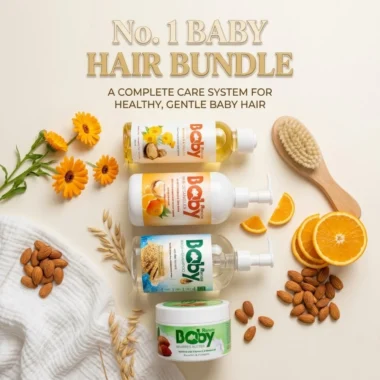
Renate’s Baby Hair Care Set is manufactured in Ghana and FDA Ghana approved, formulated specifically around harmattan and rainy-season conditions rather than adapted from a temperate-climate formula.
View the Baby Hair Products Set →