

Quick answer: The best baby hair products for newborns and low-cut hair are lightweight, fragrance-free, and focused on scalp care rather than heavy styling — since there’s little hair to style and a sensitive, more exposed scalp to protect. Heavy butters designed for fuller, coiled hair can weigh down short strands and aren’t necessary at this stage.
Why Newborns and Low-Cut Hair Need a Different Approach
Most baby hair product advice is written with fuller, longer, or more textured hair in mind — detangling tips, sealing routines, protective styling. None of that applies in the same way to a newborn or a baby with low-cut hair, where there’s often more visible scalp than actual hair. The priority shifts from styling and moisture retention in the strand to scalp health itself, since the scalp is what’s mostly exposed.
A newborn’s scalp is also thinner and more permeable than an older baby’s, which means baby hair products for newborns need to be judged more on gentleness and ingredient simplicity than on styling performance. What works well for a two-year-old’s thick curls can be entirely the wrong choice for a two-week-old with almost no hair at all.
Lightweight vs. Heavy: Choosing the Right Texture
Baby hair products for newborns and low-cut hair should generally be lighter in texture than products formulated for fuller, coiled hair. A thick, whipped butter that’s ideal for sealing longer coils can sit heavily on a mostly-bare scalp, potentially clogging pores or attracting dust and lint. A lighter lotion, water-based leave-in, or small amount of a fast-absorbing oil is usually a better match for low-cut hair, where the goal is scalp hydration rather than strand protection.
As hair grows in and coverage increases, the right product texture typically shifts toward the richer, sealing-focused formulas described in most general baby hair product guides. Until then, less is genuinely more.
Newborn Scalp Sensitivity: What to Look For
- Fragrance-free or minimally scented. Newborn skin reacts more readily to added fragrance than older infant skin.
- Tear-free, pH-balanced formulas. Especially important around the eyes and fontanelle area during bath time.
- Short, simple ingredient lists. Fewer ingredients generally means fewer potential irritants for a newborn’s more reactive skin.
- Dermatologically tested claims. A meaningful signal on newborn-specific products, more so than on products marketed to older babies.
Washing over the fontanelle — the soft spot on a newborn’s head — is safe with a gentle product; the fontanelle is protected by a tough membrane beneath the skin, but a tear-free, mild formula still makes bath time easier on a nervous first-time parent as much as on the baby.
Cradle Cap: What Baby Hair Products Can (and Can’t) Help With
Many parents shopping for baby hair products for newborns are actually dealing with cradle cap — the common, harmless yellow or white scaly patches that show up on a newborn’s scalp in the first few months. According to the Mayo Clinic, cradle cap is a short-lived, common condition in infants that typically clears up on its own within the first several months of life. See the Mayo Clinic overview →
A gentle, regular wash with a mild baby shampoo can help loosen mild cradle cap scales over time, and a light oil applied briefly before washing can soften more stubborn patches. What baby hair products generally can’t do is clear a severe or spreading case — if patches thicken significantly, spread beyond the scalp, or appear irritated, that’s a signal to check with a pediatrician rather than trying a different product.
A Lightweight Routine for Newborns and Low-Cut Hair
- Cleanse. A tear-free wash, 2–3 times a week, is generally enough — daily washing isn’t necessary and can dry out a newborn’s scalp unnecessarily.
- Light detangle (if any). With little to no hair length, this step is often skippable; a light leave-in mist can still help with any fine, fuzzy growth.
- Light seal. A small amount of a lightweight oil or lotion — not a heavy whipped butter — keeps the scalp comfortable without weighing anything down.
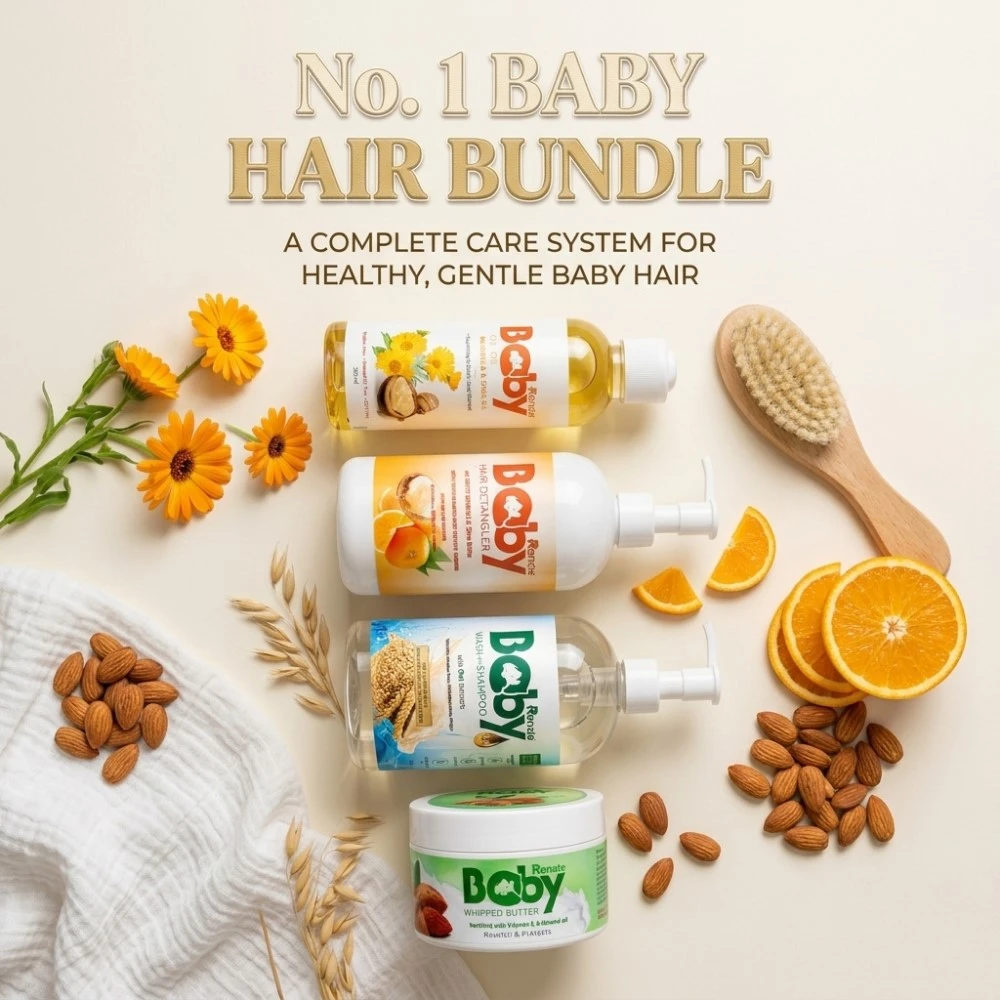
Renate’s Baby Hair Care Set is formulated with shea butter, aloe vera, avocado oil, and Vitamin E and can be used lightly at this stage — a small amount goes further on low-cut hair than it would on fuller coils, and the same baby hair products set grows with the baby as hair fills in.
Newborn/Low-Cut vs. Toddler/Fuller-Hair Needs
| Newborn / Low-Cut Hair | Toddler / Fuller, Coiled Hair |
|---|---|
| Priority: scalp health | Priority: moisture retention in strand |
| Lightweight lotions, thin oils | Richer butters and sealing oils |
| Detangling minimal or unnecessary | Detangling a core routine step |
| Fragrance-free strongly preferred | Naturally scented formulas usually fine |
Climate Considerations for Newborns Specifically
Ghana’s harmattan season affects newborns more than it affects older babies, simply because a newborn’s thinner skin loses moisture faster. During harmattan, a light daily application of a gentle oil or lotion on the scalp is more justified for a newborn than it would be during the rainy season, when the same daily application could feel unnecessarily heavy against naturally higher ambient humidity. This is one of the few cases where seasonal adjustment matters even before there’s much hair to protect — the scalp itself still needs the same climate-aware care that fuller hair gets in general baby hair product routines.
A Buying Checklist for This Stage
Before adding baby hair products for newborns to a shopping list, running through a short checklist helps avoid picking something formulated for the wrong stage:
- Is the texture a lotion, light lotion-oil hybrid, or thin oil — rather than a thick, whipped butter meant for sealing longer coils?
- Is the formula fragrance-free or very lightly scented, rather than heavily perfumed?
- Does the label specifically mention suitability for newborns, or is it only marketed toward toddlers and older infants?
- Is the ingredient list short, with recognizable ingredients near the top rather than a long list of fillers?
- Is there an FDA registration number visible on the packaging, confirming the formula has been through regulatory review?
How Long Before Results Are Noticeable at This Stage
Because there’s so little hair to work with at the newborn and low-cut stage, “results” mostly means scalp condition rather than visible hair changes. A dry, flaky scalp typically responds to consistent gentle washing and light oiling within one to two weeks. Mild cradle cap usually takes longer — several weeks of gentle care is common before scales visibly loosen, and as covered above, it often resolves on its own within the first several months regardless of what’s used.
Actual hair growth and thickness are driven far more by age, genetics, and nutrition than by any hair product, so it’s worth setting expectations around scalp comfort and hygiene rather than expecting a specific hair product to accelerate growth at this stage.
Transitioning as Hair Grows In
The shift away from lightweight, newborn-focused baby hair products usually happens gradually rather than at a fixed age. As a general guide, once there’s enough hair length to detangle with fingers or a soft comb, it’s worth introducing a light leave-in detangler alongside the existing wash. Once hair is dense enough that the scalp is no longer the majority of visible surface area, a richer sealing butter — the kind covered in most general baby hair product guides — becomes more relevant than the lighter lotions and oils appropriate for the newborn stage.
Common Mistakes for This Use Case
- Using adult-strength or fuller-hair products. Products formulated for thick, coiled hair are usually too heavy for a mostly-bare newborn scalp.
- Over-treating cradle cap. Aggressively scrubbing or picking at scales can irritate the scalp; a gentle wash and light oil is usually enough.
- Skipping the scalp entirely. With so little visible hair, some parents skip scalp care altogether — but the scalp still benefits from gentle, regular cleansing.
- Introducing fragrance too early. Even naturally derived fragrance compounds can be more than a newborn’s skin needs in the first few months.
Frequently Asked Questions
Do newborns need special baby hair products, or will any baby shampoo do?
A tear-free, fragrance-free formula is worth prioritizing for newborns specifically, since their skin is more reactive than an older infant’s. A generic baby shampoo may work, but checking the ingredient list matters more at this stage than at any other.
Is it safe to wash over a newborn’s soft spot (fontanelle)?
Yes — the fontanelle is protected by a tough membrane beneath the skin, and gentle washing with a mild product is safe. Using a soft touch rather than a hard scrub is a sensible precaution either way.
When should baby hair products change from lightweight to richer formulas?
Generally as hair length and coverage increase — once there’s enough hair to detangle and style, richer sealing products become more relevant than they were at the newborn, low-cut stage.
Can baby hair products cure cradle cap?
Gentle, regular washing and light oiling can help manage mild cradle cap, but they don’t “cure” it in the sense of stopping it from occurring — it typically resolves on its own within the first several months regardless. Severe or spreading cases warrant a pediatrician visit.
Are heavier baby hair products harmful for low-cut hair, or just unnecessary?
Generally more unnecessary than harmful, though heavier products can occasionally contribute to clogged pores or a greasy-feeling scalp on very short hair, simply because there’s less hair to absorb the product before it reaches the skin.
A Set Gentle Enough to Start Light
Renate’s Baby Hair Care Set can be used sparingly for newborns and low-cut hair, then built up as hair grows — formulated with shea butter, aloe vera, avocado oil, and Vitamin E, and FDA Ghana approved.
View the Baby Hair Products Set →