

Why Scars and Stretch Marks Form on Melanin-Rich Skin
Scars and stretch marks are two of the most common skin concerns among women in Ghana and across West Africa — and yet they are still widely misunderstood. Understanding exactly why they form is the first step to treating them effectively.
- Why Scars and Stretch Marks Form on Melanin-Rich Skin
- 7 Proven Natural Ingredients That Fade Scars and Stretch Marks
- Your Daily Skincare Routine for Scars and Stretch Marks
- Ghana’s Climate and Its Effect on Scars and Stretch Marks
- How Renate Cosmetics Supports Your Skin Healing Journey
- Frequently Asked Questions About Scars and Stretch Marks
Stretch marks (medically called striae distensae) occur when the skin is pulled beyond its elastic limit. This happens during pregnancy, rapid weight gain, growth spurts in teenagers, or significant muscle building. The collagen and elastin fibres in the dermis — the deeper layer of skin — tear under the strain, leaving behind those characteristic streaks.
Scars, on the other hand, form when the skin repairs itself after a wound, burn, surgery, or severe acne. During healing, the body lays down collagen in a rushed, disorganised pattern — which is what gives scar tissue its different texture and colour.
For women with deeper skin tones, both conditions carry an extra layer of complexity. Melanin-rich skin is more prone to post-inflammatory hyperpigmentation (PIH) — meaning a scar or stretch mark can darken significantly, becoming more noticeable than it would on lighter skin. It also means that aggressive treatments like chemical peels or laser therapy carry a higher risk of causing further discolouration. According to the WHO, skin conditions disproportionately impact quality of life in low- and middle-income regions, where access to specialist dermatological care remains limited. Natural, consistent topical care is therefore not just a preference — it is often the most practical and safest path forward.
7 Proven Natural Ingredients That Fade Scars and Stretch Marks
The good news is that nature offers a powerful toolkit for addressing scars and stretch marks. These are the ingredients with the strongest evidence base — and the most relevance to the Ghanaian market.
- Shea Butter — Ghana’s own superfood for skin. Unrefined shea butter is rich in triterpene alcohols, which have demonstrated anti-inflammatory and wound-healing properties. It deeply moisturises the dermis, improves skin elasticity, and helps reduce the appearance of both scars and stretch marks over time. Its thick, occlusive texture makes it especially valuable during harmattan, when skin loses moisture rapidly.
- Rosehip Seed Oil — Packed with trans-retinoic acid (a natural form of vitamin A) and linoleic acid. Clinical studies show it can significantly reduce the colour and texture of post-surgical scars and stretch marks with consistent use over 12 weeks.
- Sweet Almond Oil — High in vitamin E and oleic acid. A 2016 study published in the Journal of Midwifery & Reproductive Health found sweet almond oil significantly reduced the severity of stretch marks in pregnant women when applied regularly.
- Centella Asiatica (Gotu Kola) — A botanical extract that stimulates collagen synthesis and has been used in wound healing for centuries. It helps remodel disorganised scar tissue into smoother skin.
- Vitamin E (Tocopherol) — A fat-soluble antioxidant that protects the skin from oxidative stress during healing and supports the formation of healthy, flexible new skin cells.
- Niacinamide (Vitamin B3) — A proven brightener that inhibits the transfer of melanin to skin cells, directly addressing the hyperpigmentation that makes scars and stretch marks darker on deeper skin tones.
- Coconut Oil — Widely used across West Africa, coconut oil provides lauric acid and medium-chain fatty acids that strengthen the skin barrier, reduce inflammation, and keep the skin supple enough to resist new tearing.
Your Daily Skincare Routine for Scars and Stretch Marks
Consistency is the single most important factor when treating scars and stretch marks. Even the most potent ingredient will fail if applied irregularly. Here is a practical daily routine designed for the Ghanaian lifestyle.
Morning Routine
- Cleanse gently — Use a mild, sulphate-free body wash to avoid stripping the skin’s natural oils.
- Apply your treatment oil or butter while skin is still damp — Applying to damp skin locks in extra moisture. This is especially important in the dry harmattan season (November to March), when the Saharan winds pull moisture from the skin.
- Sun protection — UV exposure darkens hyperpigmentation significantly. Apply a broad-spectrum SPF 30+ sunscreen over any exposed areas with scars or stretch marks. The NHS advises that protecting scars from the sun is one of the most important steps in preventing long-term darkening.
Evening Routine
- Exfoliate 2–3 times per week — A gentle sugar scrub or konjac sponge removes dead skin cells and allows your treatment products to penetrate more deeply.
- Massage your treatment product in circular motions for 3–5 minutes — Massage improves local blood circulation, encourages collagen remodelling, and helps break down fibrous scar tissue over time. Do not skip this step.
- Layer with a rich body butter at night — Overnight is when the skin does its deepest repair work. A thick, occlusive layer of shea-based butter seals in your treatment actives and provides the hydration the dermis needs to rebuild.
For pregnant women actively trying to prevent new stretch marks, start this routine in the first trimester — do not wait until the marks appear. The skin is far easier to support before the collagen fibres tear than after.
Ghana’s Climate and Its Effect on Scars and Stretch Marks
Living in Ghana means your skin faces two very distinct seasonal challenges — and both affect how scars and stretch marks look and heal.
Harmattan season (roughly October to March) brings dry, dusty winds from the Sahara. Skin loses transepidermal water rapidly during this period. Dehydrated skin loses elasticity, which makes existing stretch marks more pronounced and visible, and slows down the healing of scars. During harmattan, switch to heavier, more occlusive formulations — unrefined shea butter on its own or blended with a few drops of rosehip oil is ideal.
The rainy/humid season brings its own challenges. High humidity can encourage fungal skin infections, and the heat causes increased sweating, which can irritate healing scar tissue. During this season, lighter oils like sweet almond or jojoba work well — they absorb quickly and do not block pores.
Across both seasons, the key principle remains the same: keep the skin consistently hydrated and nourished. Scars and stretch marks heal faster on well-moisturised skin because the skin’s repair enzymes function more efficiently in a hydrated environment.
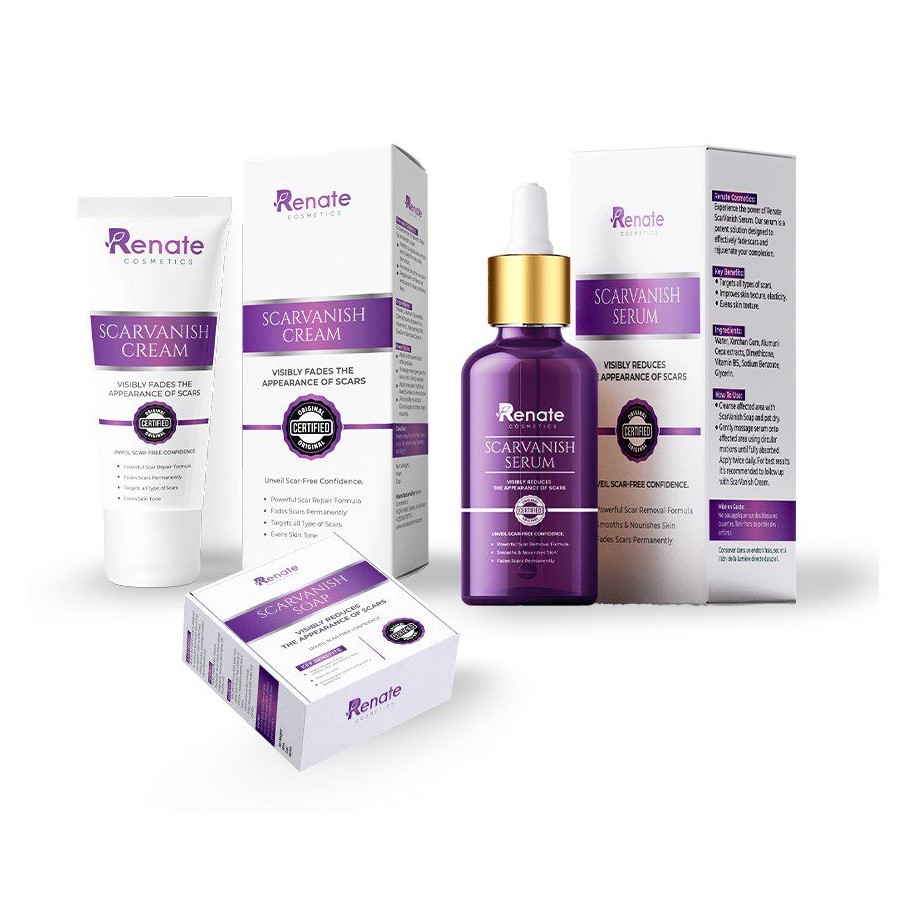
How Renate Cosmetics Supports Your Skin Healing Journey
At Renate Cosmetics, every formulation is built on the principle that nature — particularly West Africa’s own botanical wealth — holds the most effective and safest answers for our skin. Our products are manufactured in Ghana, free from harsh chemicals, and specifically developed with melanin-rich skin in mind.
If fading scars and stretch marks is your goal, we encourage you to approach it as a consistent ritual rather than a quick fix. The skin renewed itself every 28 to 40 days — real visible improvement in scars and stretch marks typically requires 8 to 12 weeks of daily application.
Our formulations combine the proven ingredients outlined above — unrefined Ghanaian shea butter, nourishing natural oils, and gentle botanical actives — into products designed for daily use in our tropical climate. Whether you are a new mother dealing with post-pregnancy stretch marks, or a woman looking to fade old surgical scars or acne marks, Renate has a solution designed around your skin’s real needs.
Browse our full range at renatecosmetics.com to find the right product for your skin journey.
Frequently Asked Questions About Scars and Stretch Marks
Can scars and stretch marks fully disappear?
Truly complete removal is rarely possible without clinical procedures. However, with consistent natural care, scars and stretch marks can fade significantly — becoming much lighter, flatter, and less noticeable over several months. The key is early intervention and daily consistency.
How long does it take to see results when treating scars and stretch marks?
Most people begin to notice a visible difference after 8 to 12 weeks of daily use. The skin’s natural renewal cycle is approximately 28–40 days, so meaningful collagen remodelling takes multiple cycles. Do not give up before 3 months.
Is shea butter effective for scars and stretch marks?
Yes. Unrefined shea butter is one of the most evidence-supported natural treatments for both conditions. Its triterpene compounds reduce inflammation, while its fatty acids improve skin elasticity and barrier function — all of which support the fading of scars and stretch marks.
Can I use these treatments during pregnancy?
Most natural oils and shea butter are considered safe during pregnancy. However, always avoid products containing retinol (synthetic vitamin A) during pregnancy. Natural rosehip oil contains only trace amounts of trans-retinoic acid and is generally considered safe, but consult your midwife or doctor if you are unsure.
Do scars and stretch marks look worse during harmattan?
Yes — dehydrated skin makes stretch marks appear more pronounced and scars more visible. During harmattan, increase the frequency of your moisturising routine and use heavier, more occlusive formulations like unrefined shea butter to combat moisture loss.
Are darker stretch marks harder to treat than white/silver ones?
Fresh, red or dark-purple stretch marks (striae rubrae) are actually more responsive to treatment than older, silver-white ones (striae albae). The newer marks still have active inflammation and blood supply in the area, meaning the skin is still in an active remodelling phase. Start treatment as early as possible for the best outcome.
Does massaging help fade scars and stretch marks faster?
Yes. Regular massage — 3 to 5 minutes of firm, circular pressure over the affected area — improves blood flow, encourages collagen remodelling, and has been shown to soften and flatten raised scar tissue. Always massage with a nourishing oil or butter rather than on dry skin to avoid friction damage.