

Introduction
Finding the right baby lotion for newborns with sensitive skin is one of the first — and most important — decisions you will make as a new parent. Your newborn’s skin is extraordinarily delicate. It is up to 60% thinner than adult skin, absorbs ingredients much faster, and has a skin barrier that is still developing in those precious first weeks of life.
In Ghana, this challenge comes with an extra layer of complexity. The tropical humidity of the coastal south, the harmattan dryness that sweeps across the north, and the melanin-rich skin tones of our babies all call for a lotion that truly understands West African skin — not a product formulated for entirely different climates and skin types.
This guide will walk you through everything you need to know: the science behind newborn skin, the ingredients that nourish without irritating, the chemicals that should never go near your baby, and how to build a simple, safe skincare routine that works in our environment. Because every Ghanaian baby deserves nothing less than the best.
Why Newborn Skin Needs Special Care in Ghana’s Climate
Newborn skin is not simply “small adult skin.” According to the World Health Organization, a newborn’s skin barrier function is still maturing for the first several weeks after birth. This means it loses moisture faster, absorbs topical substances more readily, and reacts more strongly to environmental irritants.
In Ghana’s climate, this matters enormously. During the rainy season, high humidity can encourage bacterial growth in skin folds — places like the neck, armpits, and behind the knees. During harmattan, the dry, dusty winds strip moisture from baby skin rapidly, leading to tightness, flaking, and discomfort. Even indoors, air conditioning in many Accra homes and hospitals creates a dry environment that dehydrates newborn skin.
Melanin-rich skin, while blessed with natural UV protection, is also more prone to conditions like eczema, post-inflammatory hyperpigmentation, and ashy skin if the moisture barrier is not properly maintained. This is why choosing a baby lotion for newborns with sensitive skin that is specifically formulated to support the skin barrier — rather than just temporarily masking dryness — is so critical from day one.
A good lotion should do three things: seal in moisture, support the natural skin barrier, and do so without introducing irritating chemicals into your baby’s rapidly absorbing skin.
What to Look For in a Baby Lotion for Newborns with Sensitive Skin
Not all “gentle” or “baby” labelled products are created equal. When choosing a baby lotion for newborns with sensitive skin, look for these key ingredients and qualities:
- Shea Butter: A West African treasure that has been used for generations. Rich in vitamins A and E, shea butter is a powerful emollient that softens skin and reduces inflammation. It is non-comedogenic and gentle enough even for the most delicate newborn skin. Ghanaian shea butter in particular is cold-pressed and retains its full nutritional profile.
- Natural Plant Oils: Look for oils like sweet almond oil, coconut oil, or jojoba oil. These mimic the skin’s natural sebum, lock in hydration, and absorb without leaving a heavy, greasy residue — important in humid climates.
- Botanical Extracts: Chamomile, calendula, and aloe vera are well-known for their soothing and anti-inflammatory properties. They calm redness, ease irritation, and support the skin’s healing process.
- Fragrance-Free or Naturally Scented: Synthetic fragrances are one of the top triggers of contact dermatitis in newborns. Opt for fragrance-free formulas or products scented only with mild natural extracts.
- pH-balanced formula: Newborn skin has a slightly acidic pH (around 4.5–5.5). A lotion that respects this pH helps maintain the acid mantle — the skin’s first line of defence against bacteria and moisture loss.
The American Academy of Pediatrics (AAP) recommends using minimal skincare products on newborns and choosing those with simple, well-tested ingredient lists — especially in the first month of life.
Ingredients to Avoid in Baby Lotions
Knowing what not to put on your newborn’s skin is just as important as knowing what to use. Many products marketed as “baby lotions” still contain ingredients that can harm sensitive, developing skin. When shopping for a baby lotion for newborns with sensitive skin, always scan the ingredients list and avoid the following:
- Parabens (methylparaben, propylparaben): These synthetic preservatives are hormone disruptors and have no place in a newborn’s skincare routine.
- Mineral Oil and Petroleum (Petrolatum): While these create a moisture barrier, they are derived from petroleum and can clog pores, trapping bacteria beneath the skin’s surface.
- Synthetic Fragrances: Often listed simply as “fragrance” or “parfum” on labels, these can contain dozens of undisclosed chemicals, many of which are known allergens.
- Alcohol (Ethanol, Isopropyl Alcohol): Drying and irritating, especially on the thin skin of a newborn. Some alcohols, however, like cetyl or stearyl alcohol, are fatty alcohols and are safe — so look carefully.
- Sodium Lauryl Sulfate (SLS): A harsh detergent that strips the skin’s natural oils and disrupts the moisture barrier.
- Phthalates: Often hidden in “fragrance” blends, these chemicals have been linked to hormonal disruption in infants.
- Talc: Common in older-generation baby powders, talc particles can be inhaled and have been associated with respiratory issues in infants.
Reading labels takes a little practice, but it quickly becomes second nature. When in doubt, the shorter and more natural the ingredient list, the safer it generally is for your newborn.
Renate Products for Baby Lotion for Newborns with Sensitive Skin
At Renate Cosmetics, we understand that Ghanaian mothers do not want to guess what is in their baby’s lotion. We formulate our products with natural, skin-safe ingredients — no harsh chemicals, no synthetic fragrances, no compromises.
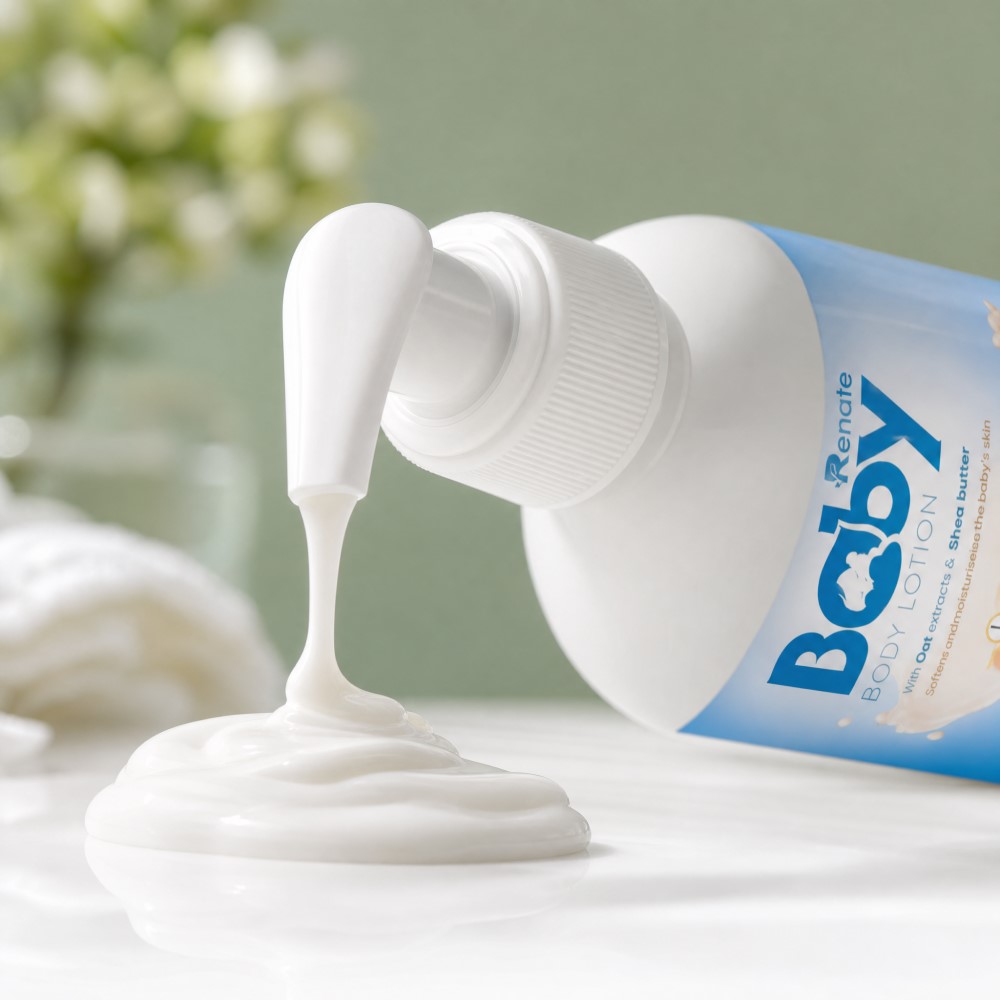
For mothers looking for the best baby lotion for newborns with sensitive skin, we recommend starting with the Renate Baby Lotion. This lotion was created specifically for the thin, absorbent skin of babies — the kind of skin that soaks up everything it touches. It is crafted with nourishing natural ingredients including shea butter and gentle botanical extracts, designed to hydrate without irritating, and to protect without blocking.
The generous 500 mL size is perfect for daily use, which is essential in both Ghana’s humid coastal climate and the drying harmattan season. Whether you are doing a post-bath massage or applying moisture throughout the day to prevent the “ashy” look that dry skin brings, the Renate Baby Lotion absorbs beautifully into melanin-rich skin without leaving a white cast or greasy residue.
Made in Ghana, formulated for Ghanaian babies. That is the Renate promise — and it starts from the very first bath.
How to Apply Baby Lotion the Right Way
Even the best baby lotion for newborns with sensitive skin will not deliver its full benefits if it is applied incorrectly. Here is a simple, expert-approved routine for Ghanaian mums:
- Bathe with lukewarm water: Avoid hot water, which strips natural oils. A short, 5–10 minute bath is ideal. Use a gentle, soap-free cleanser if needed.
- Pat — do not rub — dry: Use a soft, clean towel and gently pat the skin. Rubbing creates friction that can irritate sensitive newborn skin.
- Apply lotion within 3 minutes: This is the golden window. Moisturiser applied to slightly damp skin seals in water before it evaporates, dramatically improving hydration.
- Use gentle, circular strokes: Apply the lotion using the palm of your hand with soft, circular massaging motions. This doubles as a bonding activity and stimulates circulation.
- Pay attention to folds: The neck, armpits, behind the knees, and groin folds are prone to dryness and moisture trapping. Be thorough but gentle.
- Avoid the face initially: For the first few weeks, the face produces enough of its own natural oils. Focus on the body unless your paediatrician advises otherwise.
- Once or twice daily is enough: Over-moisturising can actually disrupt the skin’s natural microbiome. Morning after bath and evening before sleep is a good rhythm.
If you notice any redness, rash, or unusual reaction after applying any product, stop use immediately and consult your paediatrician or dermatologist.
Frequently Asked Questions
When should I start using baby lotion for newborns with sensitive skin?
You can begin using a gentle, natural baby lotion from birth. However, the first few days after delivery, your baby’s skin is still shedding the vernix — the white protective coating present at birth. Many paediatricians recommend waiting until this natural process is complete (usually within the first week) before introducing any lotion. After that, daily moisturisation is beneficial, especially in dry or air-conditioned environments.
Is shea butter safe for a newborn’s skin?
Yes — shea butter is one of the safest, most nourishing ingredients for newborn skin. It has been used by West African mothers for centuries. It is rich in vitamins A and E, has natural anti-inflammatory properties, and is gentle enough for even the most sensitive skin. As long as your baby has no specific nut allergy (which is rare in infants), shea butter is an excellent choice.
How do I know if a baby lotion is causing a reaction on my newborn’s skin?
Signs of a reaction include redness, small bumps or hives, increased crying during or after application, or dry patches that worsen rather than improve. If you notice any of these, discontinue use immediately. Always do a small patch test on the inner arm before applying a new product all over the body. Give it 24 hours and check for any reaction before proceeding.
Can I use the same baby lotion for newborns with sensitive skin during harmattan season?
Yes, but you may need to apply it more frequently during the harmattan season when the air is dry and dusty. In some cases, layering a natural oil like shea butter over your lotion can provide extra protection against moisture loss. Make sure to keep your baby well hydrated with breast milk or formula as well, as internal hydration supports skin health from within.
Does my baby need a different lotion for the face and body?
Not necessarily — a good, gentle, fragrance-free baby lotion formulated for sensitive skin can be used on both. However, be especially careful around the eyes and mouth. Some parents prefer a plain petroleum-free balm or pure shea butter around the lips during harmattan to prevent chapping. Always consult your paediatrician if you are unsure.
Are Renate baby products suitable for premature babies?
Premature babies have even more fragile skin barriers than full-term newborns. While Renate Baby Lotion is formulated with gentle, natural ingredients, we always recommend consulting your neonatologist or paediatrician before applying any topical product to a premature infant. They will guide you based on your baby’s specific gestational age and skin condition.
How much baby lotion should I use per application?
A small amount goes a long way. A coin-sized amount (about the size of a GHS 1 coin) is usually sufficient for the whole body of a newborn. Warm the lotion between your palms before applying — this makes it more comfortable for baby and helps it spread more evenly. You should not need to reapply more than once or twice daily under normal conditions.
Conclusion
Choosing the right baby lotion for newborns with sensitive skin is a small decision with a big impact. The products you apply to your baby’s skin in those first weeks set the foundation for their skin health for years to come.
In Ghana’s diverse climate — from the humid coast to the harmattan-swept north — your newborn needs a lotion that is gentle, natural, and truly effective. One that you can trust because you know exactly what is in it and where it comes from.
The Renate Baby Lotion – Gentle, Nourishing Hydration for Delicate Skin – 500 mL was made with exactly that commitment — crafted in Ghana, for Ghanaian babies, with the natural goodness of shea butter and botanical extracts your baby’s skin deserves.
Because your baby’s skin absorbs everything. Make sure what it absorbs is worth it.