

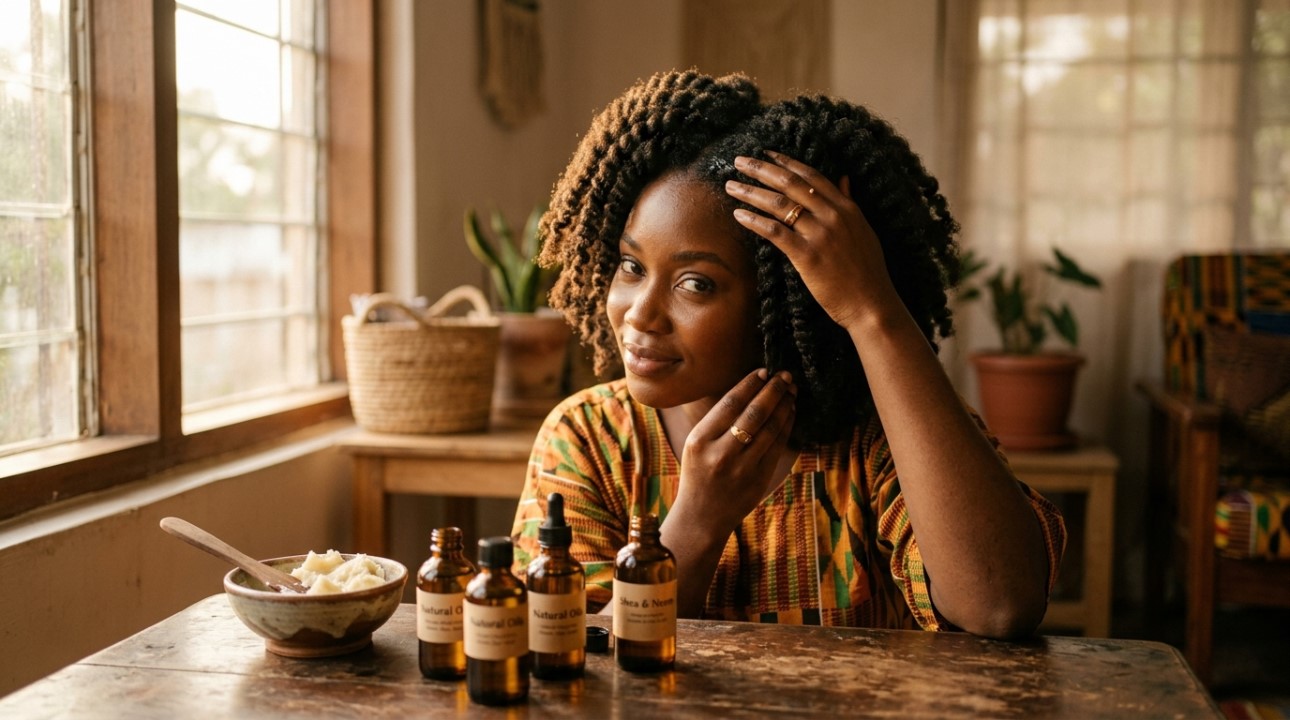
Why Hair Growth Is a Real Struggle for Ghanaian Women
Ghana hair growth products are one of the most searched topics in the country’s beauty market — and for good reason. Many Ghanaian women deal with slow growth, breakage, thinning edges, and dryness that seems impossible to beat, no matter how many products they try.
- Why Hair Growth Is a Real Struggle for Ghanaian Women
- Key Ingredients to Look for in Ghana Hair Growth Products
- How Ghana’s Climate Affects Your Hair Growth Journey
- The Best Hair Growth Routine for Natural African Hair
- Renate Cosmetics: Ghana’s Natural Hair Growth Solution
- Frequently Asked Questions About Ghana Hair Growth Products
The truth is, hair growth challenges in Ghana are rarely about your genetics. They are almost always about your environment, your routine, and the products you use. Harsh chemical relaxers, tight protective styles worn too long, and products packed with sulfates and synthetic fragrances all quietly strip your hair of the moisture and nutrients it needs to thrive.
Melanin-rich, Type 4 natural hair — the most common hair texture in Ghana — is naturally more fragile at its curl pattern. Each bend in the curl is a potential point of breakage. Without consistent moisture retention and scalp nourishment, length retention becomes nearly impossible, even when your hair is actually growing.
The good news? With the right knowledge and the right ghana hair growth products, significant improvement is absolutely achievable. This guide will walk you through everything you need to know.
Key Ingredients to Look for in Ghana Hair Growth Products
Not all hair products are created equal. When shopping for ghana hair growth products, the ingredient list tells you everything. Here are the power ingredients that science and tradition agree actually work:
Shea Butter
Ghanaian women have used raw shea butter on their hair for generations — and for excellent reason. Shea butter is rich in vitamins A and E, and its fatty acid profile (primarily oleic and stearic acids) helps seal moisture into the hair shaft. It also soothes an irritated scalp, reducing the flaking and inflammation that can block healthy follicle function.
Castor Oil
Cold-pressed castor oil is a cornerstone of effective ghana hair growth products. Its high ricinoleic acid content improves blood circulation to the scalp, stimulating dormant follicles. It also has antifungal properties that help maintain a clean, balanced scalp environment — essential for hair growth.
Coconut Oil
Unlike most oils that sit on the hair’s surface, coconut oil can actually penetrate the hair shaft due to its low molecular weight. This makes it exceptional at reducing protein loss, strengthening hair from within, and preventing breakage during detangling — a major cause of stunted length retention in Ghana.
Argan Oil
Often called “liquid gold,” argan oil is loaded with antioxidants and linoleic acid. It adds shine, improves elasticity, and helps tame the frizz that Ghana’s humidity can trigger, especially during the rainy season.
Peppermint and Tea Tree Extracts
Botanical extracts like peppermint and tea tree oil stimulate circulation at the scalp level and keep bacteria and fungi at bay. Studies have shown peppermint oil can significantly increase follicle depth and dermal thickness, two key markers of healthy hair growth. Always look for these in well-formulated ghana hair growth products.
How Ghana’s Climate Affects Your Hair Growth Journey
Ghana’s climate is both a blessing and a challenge for natural hair. Understanding it helps you choose the right ghana hair growth products for each season.
Humidity in the Rainy Season
Between April and October, Accra, Kumasi, and coastal towns experience high humidity. For Type 4 hair, this means swelling of the hair shaft, frizz, and reversion of styles. The fix is not to fight moisture but to lock it in intentionally using cream-based sealants and oils before stepping outside.
Harmattan Dryness
From November to February, harmattan winds sweep across Ghana from the Sahara, dropping humidity dramatically. This is when hair becomes brittle, breakage spikes, and scalps feel tight and itchy. During harmattan, your hair needs heavier butters, more frequent deep conditioning, and protective styling to retain length.
Hard Water in Some Regions
In parts of northern Ghana and certain urban areas, hard water — rich in calcium and magnesium — leaves mineral deposits on the hair shaft, making it feel rough and blocking moisture absorption. Rinsing with filtered or rainwater, or using an apple cider vinegar rinse periodically, can help clear this buildup so your ghana hair growth products can actually penetrate and work.
The Best Hair Growth Routine for Natural African Hair
The most effective ghana hair growth products in the world will underperform without a consistent routine. Here is a simple, proven framework:
- Scalp massage (3–5 times per week): Use your fingertips or a scalp massager with a light oil blend for 3–5 minutes. This boosts blood flow to follicles and is one of the most research-backed steps for stimulating hair growth.
- Cleanse weekly or bi-weekly: Use a sulfate-free shampoo to remove buildup without stripping natural oils. Overwashing is a common mistake — it dehydrates the scalp and causes rebound oil production.
- Deep condition after every wash: Apply a rich, penetrating conditioner with heat (a shower cap and warm towel work perfectly) for 20–30 minutes. This is non-negotiable for Type 4 hair.
- The LOC or LCO method: After washing, apply products in layers — Liquid (water or leave-in), Oil (to seal), and Cream (to lock in). In Ghana’s harmattan season, the LCO order (Liquid, Cream, Oil) often works better as cream provides a barrier before the sealing oil.
- Protective styling: Braids, twists, and buns reduce manipulation and protect ends. According to the American Academy of Dermatology, reducing daily manipulation is one of the most effective strategies for retaining hair length.
- Trim every 8–12 weeks: Split ends travel up the shaft and cause further breakage. Trimming regularly ensures the length you grow is actually retained.
- Nutrition and hydration: Hair growth starts from within. Ensure adequate protein (eggs, beans, fish), iron (leafy greens, liver), and water intake. Biotin-rich foods like groundnuts and avocados are excellent and widely available in Ghana.
Renate Cosmetics: Ghana’s Natural Hair Growth Solution
When it comes to trusted ghana hair growth products, Renate Cosmetics has built a reputation as one of the most reliable natural beauty brands manufactured right here in Ghana. Every product is formulated with locally sourced shea butter, natural oils, and gentle botanical extracts — completely free from harsh sulfates, parabens, and synthetic fragrances that damage fragile African hair textures over time.
What makes Renate stand out in the crowded market of ghana hair growth products is the commitment to ingredients that are proven to work for the specific needs of Ghanaian women — from the dry heat of the north to the coastal humidity of Accra. The formulations are designed to deeply nourish the scalp, improve moisture retention, and strengthen hair at the root level, so growth is not just stimulated but actually retained.
Whether you are dealing with thinning edges, slow growth, breakage from years of chemical treatments, or simply want to give your natural hair the nourishment it deserves, Renate’s range offers a clean, effective, and proudly Ghanaian alternative to imported products that are often formulated for completely different hair types and climates.
Renate Cosmetics products are available across Ghana and throughout Francophone West Africa, making them accessible to women across the region who are seeking genuinely effective, natural ghana hair growth products they can trust.
Frequently Asked Questions About Ghana Hair Growth Products
What are the best ghana hair growth products for natural hair?
The best ghana hair growth products for natural hair contain ingredients like shea butter, castor oil, coconut oil, and botanical extracts such as peppermint and tea tree. These ingredients nourish the scalp, strengthen the hair shaft, and retain moisture — the three pillars of healthy hair growth for Type 4 African hair textures common in Ghana.
How long does it take to see results from hair growth products in Ghana?
Human hair grows an average of 1–1.5 cm per month. With consistent use of quality ghana hair growth products and a good routine, most women notice visible improvement in hair thickness, scalp health, and length retention within 8–12 weeks. Full results, especially for significant length gain, typically take 6–12 months of consistent effort.
Can I use ghana hair growth products on relaxed hair?
Yes. Relaxed hair is actually more fragile than natural hair and benefits greatly from nourishing ghana hair growth products rich in shea butter and strengthening oils. Focus on protein treatments, deep conditioning, and scalp care. Avoid overlapping relaxer on already-processed hair and give your scalp at least 4–6 weeks between touch-ups.
Are natural hair growth products better than chemical ones?
For most Ghanaian women, yes. Natural ghana hair growth products work with your hair’s biology rather than against it. Ingredients like castor oil and shea butter are time-tested and do not cause the scalp sensitisation, build-up, or long-term damage that many chemical-heavy products can. They are also safer for women who are pregnant or breastfeeding.
How does harmattan affect hair growth and which products help?
Harmattan strips moisture from both the scalp and the hair shaft, causing brittleness and increased breakage. During this season, switch to heavier ghana hair growth products — thick shea butter blends, hot oil treatments, and cream-based leave-in conditioners. Protective styles like braids also help shield your hair from the drying wind.
Should I use ghana hair growth products on my scalp or just my hair?
Both, but the scalp comes first. Hair growth happens at the follicle level in the scalp. Applying ghana hair growth products like castor oil or scalp serums directly to the scalp and massaging them in is the most direct way to stimulate growth. Then use moisturising creams and butters along the hair shaft to prevent breakage and retain the length you grow.
What is the biggest mistake Ghanaian women make with hair growth products?
Inconsistency. Many women switch ghana hair growth products every few weeks when they do not see instant results. Hair growth is a slow biological process — no product produces overnight miracles. Commit to a routine and give it at least 90 days before evaluating results. The second biggest mistake is neglecting the scalp and focusing only on the hair strands.
Final Thoughts: Growing Your Hair the Ghanaian Way
The journey to longer, stronger hair starts with the right knowledge and the right ghana hair growth products. Ghana’s natural heritage — from raw shea butter to cold-pressed local oils — gives us some of the world’s most powerful hair growth ingredients right on our doorstep. The key is using them consistently, in the right routine, and choosing brands that formulate products specifically for our hair types and our climate.
Your hair has the capacity to grow beautifully. Give it the nourishment it deserves, protect it through every season, and trust the process. With patience, consistency, and quality ghana hair growth products, the healthy, full hair you want is entirely within reach.