

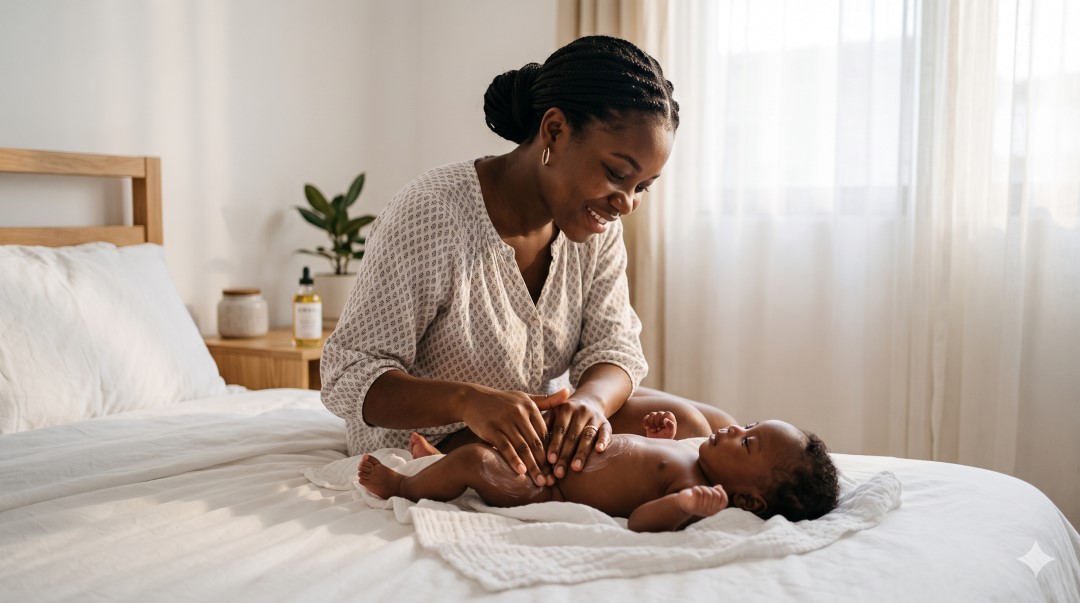
Why Baby Skin Needs Extra Moisture
The best way to moisturize baby skin naturally starts with understanding why babies need more moisture than adults in the first place. A newborn’s skin is up to 30% thinner than adult skin, which means it loses water far more quickly — a process dermatologists call transepidermal water loss (TEWL). Without a strong skin barrier, your baby’s skin is vulnerable to dryness, irritation, and environmental stress.
For mums in Ghana and across West Africa, the challenge is even more layered. Between the intense tropical humidity of the rainy season and the fierce, drying harmattan winds that sweep across the region from November to March, your baby’s skin faces two opposite extremes — often within the same year. Melanin-rich skin, while naturally more resilient, still loses moisture rapidly in these conditions and can show dryness as ashiness, tightness, or flaking.
The good news? Nature has already provided most of what your baby’s skin needs. The World Health Organisation recommends gentle, natural care for newborn skin, and the most effective moisturising ingredients — shea butter, coconut oil, and plant-based botanicals — have been trusted by West African mothers for generations.
The Best Natural Ingredients to Moisturize Baby Skin Naturally
Not all moisturisers are created equal. When you want to moisturize baby skin naturally, the ingredient list matters more than the packaging. Here are the ingredients that actually work — and why.
- Shea Butter: Ghana’s most celebrated natural ingredient is also one of the world’s most effective baby skin moisturisers. Rich in oleic acid, stearic acid, and vitamins A and E, shea butter forms a breathable barrier that seals in moisture without clogging pores. It is also naturally anti-inflammatory, making it ideal for sensitive or reactive skin.
- Coconut Oil: A lightweight emollient packed with lauric acid, which has gentle antimicrobial properties. It absorbs quickly and helps reinforce the skin’s lipid barrier — great for everyday softening.
- Sweet Almond Oil: High in vitamin E and oleic acid, this oil soothes dry, itchy skin and is light enough for even newborn skin. It is a favourite in baby massage oils across West Africa.
- Aloe Vera: A natural humectant that draws moisture into the skin and calms inflammation. Excellent for babies who experience heat rash — common in Ghana’s humid months.
- Calendula Extract: Derived from marigold flowers, calendula is clinically recognised for its soothing, wound-healing properties. It helps reduce redness and supports barrier repair in sensitive baby skin.
Ingredients to avoid in baby products: parabens, synthetic fragrances, alcohol (ethanol), and sulphates like SLS. These can strip natural oils and sensitise developing skin.
7 Proven Tips to Moisturize Baby Skin Naturally
Follow these expert-backed steps to keep your baby’s skin soft, nourished, and protected all year round.
- Moisturise immediately after bath time. Apply your chosen moisturiser within three minutes of lifting your baby from the bath. This is the golden window — pores are open and skin is still slightly damp, which helps lock in hydration far more effectively than applying to dry skin.
- Use lukewarm — never hot — water. Hot water strips the natural oils that protect your baby’s skin. Lukewarm water (around 37°C — similar to body temperature) cleanses gently without causing dryness.
- Keep bath time short. Contrary to what many parents assume, too much time in water actually dries out baby skin. Limit baths to 5–10 minutes and use a gentle, pH-balanced wash to avoid disrupting the skin’s acid mantle.
- Apply in gentle, circular motions. Massage the moisturiser in slow, gentle circles. This stimulates blood circulation, helps the product absorb deeper into the skin, and doubles as a bonding ritual that babies love.
- Pay attention to dry-prone areas. Knees, elbows, ankles, and skin folds are the first places to lose moisture. Give these areas an extra layer of care, especially during harmattan season when dryness can escalate quickly.
- Moisturise twice daily during harmattan. During Ghana’s dry season, once a day simply isn’t enough. A morning and evening routine ensures continuous protection against the drying harmattan winds.
- Use a humidifier indoors if possible. If you use air conditioning or a fan consistently, the air in your home can become very dry. A small humidifier adds moisture back into the environment, reducing the rate at which your baby’s skin dries out overnight.
How Ghana’s Climate Affects Your Baby’s Skin
Living in West Africa means your baby’s skin faces challenges that generic baby care advice — written largely for temperate European or American climates — simply does not address.
During the rainy season, high humidity can cause sweat to become trapped in skin folds, leading to heat rash (called prickly heat locally) and fungal irritation. The solution here is to moisturise with lightweight, fast-absorbing formulas that hydrate without occluding the skin — and to ensure your baby is dressed in breathable cotton fabrics.
During the harmattan season (typically October to March across Ghana and Francophone West Africa), dry, dust-laden winds from the Sahara strip moisture from exposed skin rapidly. You will notice your baby’s skin becoming ashy or flaky within hours of a morning bath. This is the season for richer, more occlusive formulas — whipped butters and thick creams that form a protective film over the skin.
Melanin-rich skin also has a higher density of melanocytes, which provides some natural UV protection, but this does not reduce the need for consistent moisturisation. In fact, ashiness — the visible sign of dehydrated dark skin — can be more prominent and is best prevented through a consistent, twice-daily routine using natural ingredients that genuinely nourish rather than just coat the skin surface.
The American Academy of Pediatrics advises parents to use fragrance-free, gentle products on newborn and infant skin — advice that aligns perfectly with natural, plant-based care.
The Right Products to Moisturize Baby Skin Naturally
Choosing the right products is as important as the routine itself. When you want to moisturize baby skin naturally, look for formulas built around the real, plant-based ingredients discussed above — not mineral oil, synthetic emollients, or artificial fragrance.
For everyday moisturising, the Renate Baby Lotion is an excellent daily option. It is a lightweight, fast-absorbing formula enriched with shea butter and gentle botanical oils, designed specifically to keep baby’s skin soft and nourished all day without any greasy residue — ideal for Ghana’s humid months when heavy creams can feel uncomfortable.
For babies with very dry, sensitive, or eczema-prone skin — especially during harmattan — a richer formula is needed. The Renate Whipped Baby Butter is a deeply nourishing, shea butter-packed body butter that goes beyond surface hydration to repair and protect the skin barrier. It is particularly effective when applied at night, giving it hours to absorb and work while your baby sleeps.
A complete moisturising routine also depends on how you cleanse. Using a harsh soap or body wash strips away natural oils before your moisturiser even has a chance to work. The Renate Baby Wash & Shampoo is a gentle, tear-free, pH-balanced 2-in-1 cleanser that washes both baby’s body and hair without stripping the skin’s natural moisture — making it the ideal first step in any natural baby skincare routine.
All three Renate products are manufactured in Ghana using natural, baby-safe ingredients and are free from harsh chemicals — making them a trusted choice for mums across Ghana and Francophone West Africa.
Frequently Asked Questions
How often should I moisturize my baby’s skin naturally?
For most babies, once daily — applied immediately after bath time — is sufficient during the rainy season. During Ghana’s harmattan season, increase to twice daily (morning and evening) to protect against the drying effects of dry, dusty winds.
Can I use shea butter directly on my newborn’s skin?
Yes. Pure, unrefined shea butter is one of the safest and most effective ingredients for newborn skin. It is widely used across West Africa and is gentle enough even for babies under one month old. Always do a small patch test first, especially if your baby has a nut allergy history.
What is the best natural oil to moisturize baby skin?
Sweet almond oil and coconut oil are two of the most popular and well-researched natural oils for baby skin. Sweet almond oil is particularly gentle and rich in vitamin E, while coconut oil offers mild antimicrobial properties and absorbs quickly without leaving skin greasy.
Is it safe to use coconut oil on a baby’s face?
Coconut oil is generally safe for a baby’s face when used sparingly. However, avoid applying it around the eyes or inside the nostrils. If your baby has eczema or very sensitive skin, patch test first and consult your paediatrician.
Why does my baby’s skin look ashy even after I moisturise?
Ashiness usually means the product you are using is sitting on top of the skin rather than being absorbed into it — a common issue with products built around mineral oil or water as their base. Switch to a shea butter or plant oil-based formula and apply it immediately after bath while skin is still slightly damp for the best absorption.
How do I moisturise my baby’s skin during harmattan season?
During harmattan, upgrade your baby’s routine from a lightweight lotion to a richer butter or cream. Apply immediately post-bath, again before bedtime, and focus on exposed areas like hands, face, and legs. Dress your baby in soft cotton layers and consider a humidifier in the bedroom to maintain indoor moisture levels.
What ingredients should I avoid when choosing a baby moisturiser?
Avoid products containing synthetic fragrances, parabens, formaldehyde-releasing preservatives, SLS (sodium lauryl sulphate), and alcohol (ethanol). These can disrupt baby’s delicate skin barrier, trigger allergic reactions, and cause long-term dryness — the opposite of what a moisturiser should do.